
Hair guide
How to Use Rosemary Oil for Hair
2 September 2026
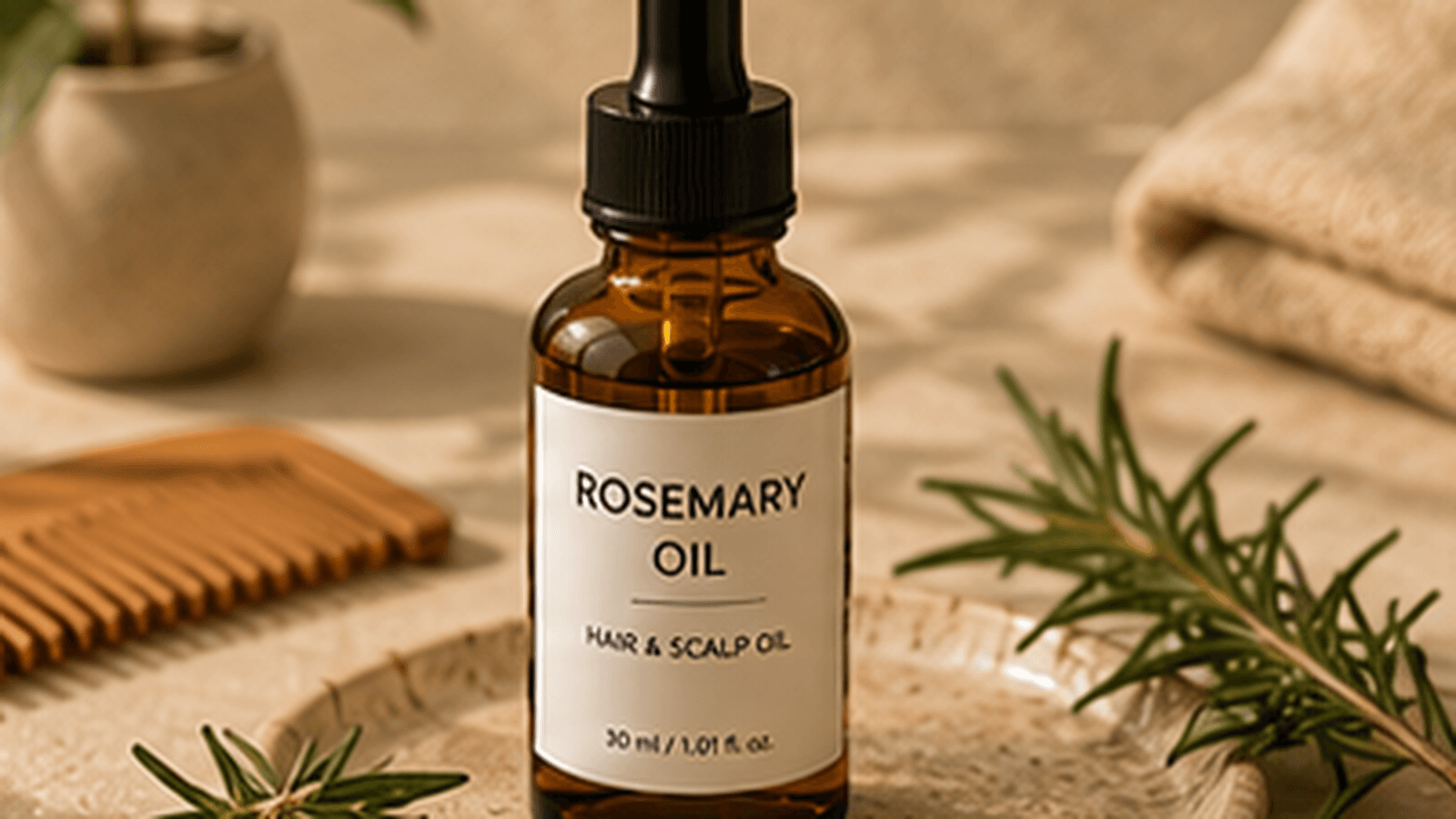
Rosemary oil for hair usually means one of two products, and they are not the same. One is the essential oil: a concentrated extract sold in a small dark bottle. The other is a hair oil or serum that already contains rosemary, diluted in a carrier such as jojoba or coconut oil. The first needs care. The second is closer to how most people should actually use it.
Social posts skip that distinction and jump to hair growth. There is a study worth knowing. There is not a cure in a dropper.
Essential oil is not a leave-on by itself
Rosemary essential oil is potent. Cleveland Clinic dermatologists advise mixing it with a carrier oil before it touches the scalp. Putting neat essential oil on skin raises the chance of redness, burning and irritation. Some people with eczema or a sensitive scalp react even to a dilute mix. A few drops in a larger amount of carrier is the usual caution, not a recipe with a magic number. Follow the dilution on a formulated hair oil if that is what you bought.
Patch-test first. A small amount on the inner arm or behind the ear for a day tells you more than a full-scalp experiment. If it itches, stings or raises a rash, do not proceed.
Pregnancy and breastfeeding are a separate caution. Cleveland Clinic notes that rosemary oil is often not recommended in those periods, and some 100% rosemary products carry warnings. The European Medicines Agency's public summary for authorised rosemary-oil herbal medicines says not to use them in pregnancy, while breastfeeding, or under the age of 18. A cosmetic hair oil is not that licensed medicine, but the same essential oil is involved. If you are pregnant, breastfeeding or treating a child's scalp, ask a clinician rather than improvising.
How to use it on the scalp
Hair lengths are not the target. If the aim is the follicle, the oil has to reach the scalp. Part the hair and massage a small amount in with your fingertips. Coating the strands may make hair feel heavier. It does not do extra growth work. A towel on the pillow overnight is ordinary housekeeping, not a sign that more oil is better.
Cleveland Clinic suggests leaving a diluted treatment on for a few hours, or overnight, then washing it out. They talk about two or three times a week, for months, not a single Sunday session. That frequency is practical guidance from clinicians, not a proven dose from a large trial. Daily use of a strong mix is more likely to irritate than to speed anything up.
If you add a drop or two of essential oil to an unscented shampoo, that is a weak leave-on at best. Shampoo is rinsed off. A scalp treatment that stays on for hours is a different use. Read the bottle you have. A ready-made rosemary hair oil already has a dilution. Do not pour extra essential oil into it to "make it stronger."
Stop if the scalp becomes sore, flaky in a new way, or intensely itchy. Overuse can inflame the skin you were trying to help. Keep it out of the eyes. Do not swallow essential oil. A scalp treatment is not a drink, and more oil on the pillow is not a higher dose.
What the hair-growth study actually found
In 2015, Panahi and colleagues published a randomised trial in SKINmed. One hundred men with androgenetic alopecia, the common pattern hair loss, used either a rosemary oil lotion or minoxidil 2% for six months. Fifty people in each group. Hair counts were checked with photographs at the start, at three months and at six months.
At three months, neither group had a meaningful change in hair count. At six months, both groups had more hairs counted than at the start. The difference between rosemary and 2% minoxidil was not statistically significant. Itching was more common in the minoxidil group.
That is the finding. It is not a small thing, and it is not a revolution. The trial was single-blind. There was no placebo or untreated group, so we cannot see how much of the change was the oil, the lotion base, or simply six months of attention to the scalp. Minoxidil 2% is a weaker strength than the 5% foam or solution many adults are prescribed or sold today. The volunteers were men with pattern hair loss. The rosemary arm used a prepared lotion, not a casual splash of kitchen essential oil. The study has not been widely replicated. It is not a medicine approval.
Cleveland Clinic still cites this work, and sometimes describes rosemary oil as comparing well with minoxidil. The honest version is narrower: in this one trial, hair count rose in both groups by a similar amount after six months, against 2% minoxidil, in men with AGA. That does not prove rosemary oil is equal to current standard treatment, better than minoxidil, or useful for every kind of hair loss.
Hair loss has more than one cause
Pattern thinning, telogen effluvium after illness or stress, iron deficiency, thyroid disease, traction from tight styles, scarring alopecias and medication effects do not share one oil. Rosemary will not sort a cause it cannot see. Cleveland Clinic is direct about expectations: if hair has been thinning for many years, do not expect a wonder. Some people notice a bit of help, especially earlier on. Many will not. There are no guarantees of thicker hair.
If shedding is sudden, comes out in patches, hurts, itches fiercely, leaves smooth or scarred scalp, or arrives with other symptoms such as fatigue or unexplained weight change, that is not a DIY oil problem. The NHS advises seeing a GP for hair loss that is patchy, sudden, or worrying in other ways. A clinician can look for causes rosemary oil cannot touch.
Used as a diluted scalp oil, rosemary can be a reasonable thing to try if you like the smell and your skin tolerates it. Used as a promised cure, it is ahead of the evidence. Keep the bottle in proportion.