
Hair guide
How to Use a Hair Mask
2 September 2026
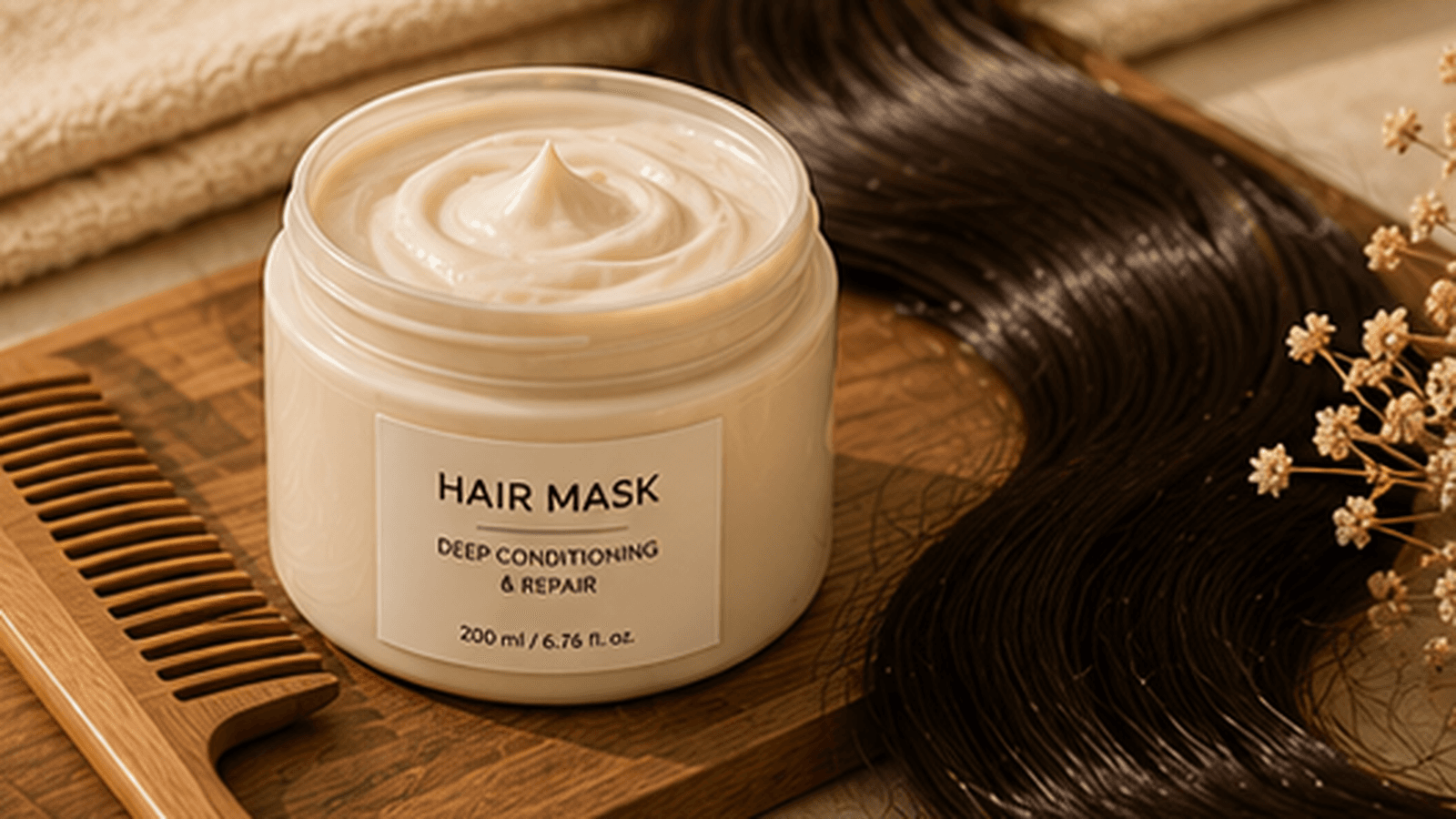
A hair mask is a heavier conditioner. It belongs on the lengths and ends, where hair is oldest and driest. It does not belong on the scalp as a default. That one distinction prevents a lot of greasy roots and disappointed bottles.
Where it goes
Cleveland Clinic dermatologists put shampoo on the scalp and conditioner on the ends. A mask follows the conditioner logic, with more time. It is usually an occasional deeper treatment, not an automatic replacement for regular conditioner, unless the pack you have says otherwise. Work it through mid-lengths to tips. If your roots get oily quickly, stop a few centimetres short of the scalp. Long hair especially does not need mask at the crown.
That is a different job from rosemary oil on the scalp. An oil treatment is aiming at skin and follicles. A mask is aiming at the fibre you already grew. Using a mask as if it were a growth oil, or an oil as if it were a mask, wastes both.
Wet hair, how long, how often
Wash first, squeeze out extra water, then apply. Damp hair takes the product more evenly than dripping hair, which just dilutes it, or dry hair, which can sit patchy. Use enough to coat, not enough to cake. A wide-tooth comb helps. Leave it for the time on the pack, often a few minutes. Overnight is only useful if the product says so. More time is not more repair once the hair is saturated.
Rinse thoroughly. Residue makes hair look lank. Cleveland Clinic suggests a weekly deep-conditioning treatment when hair is losing moisture, for example from frequent swimming. Weekly is a reasonable starting point for dry or heat-styled hair. Fine hair may want it less often. Daily mask is how lengths get heavy.
Moisture and protein are not the same mask
Many masks are moisturising: oils, butters, humectants. They make hair feel softer and less snappy. Some are labelled as protein or keratin repair. Those are a different kind of product, aimed at the fibre rather than adding slip and softness. If a mask leaves hair feeling stiff rather than smoother, try a simpler moisturising mask next time, and follow the label on the one you bought.
Read the label you have. There is no universal number of minutes that fits every formula. If the scalp itches or flakes in a new way after a mask, keep it off the roots. If hair is breaking, shedding in patches, or the scalp is sore, a mask will not diagnose that. That is a clinician, not a thicker cream.