
Skincare guide
How to Use Aloe Vera Gel on Your Face
2 September 2026
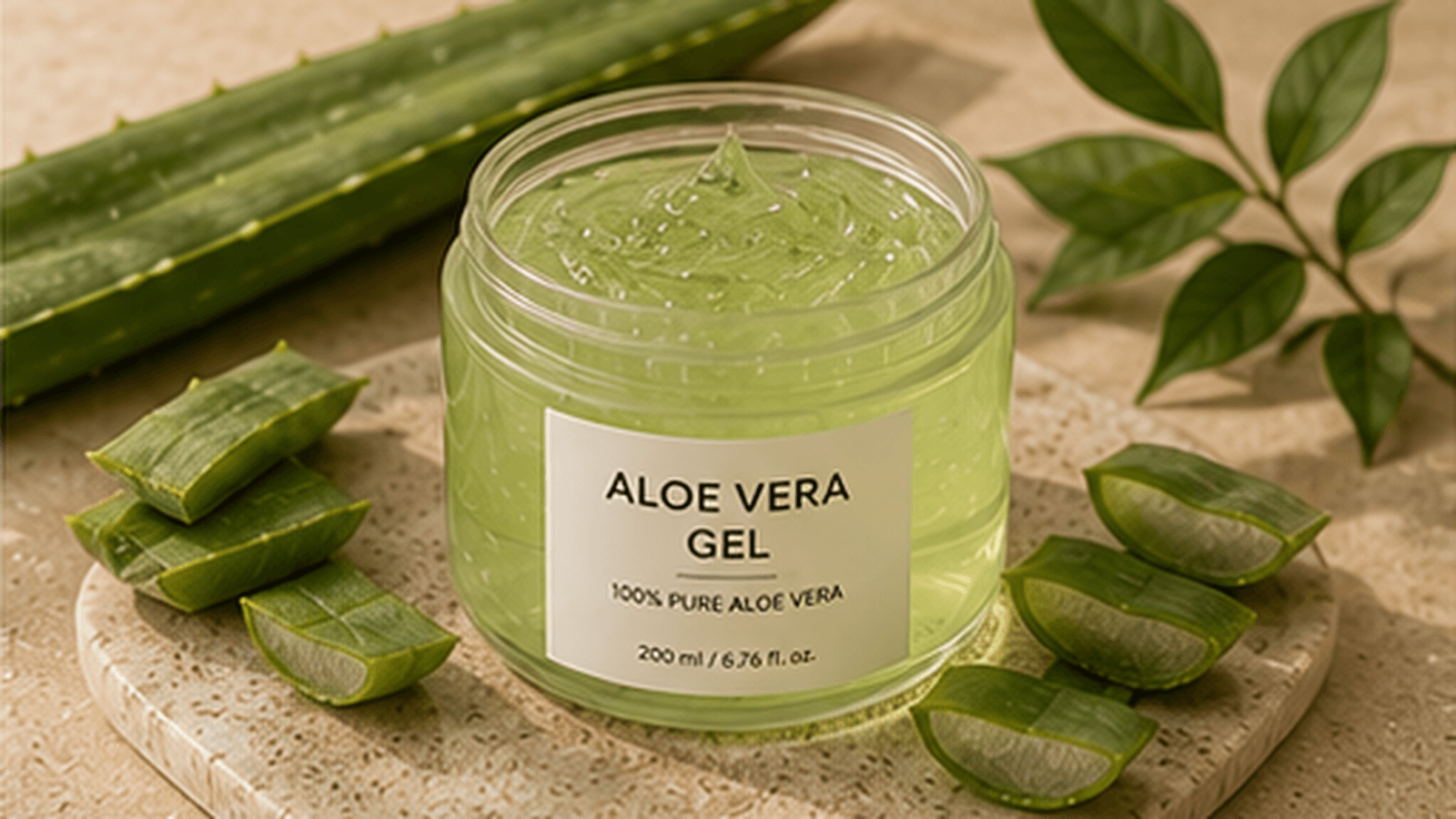
A tub of aloe vera gel is often sold as if it were a treatment for everything that stings. On the face, it is mostly a cool, watery layer. That can feel pleasant. It is not an acne plan, and it is not sunscreen.
What you are actually spreading
Aloe gel comes from the inner leaf of the plant. Shop gels are that material plus water, preservatives and, sometimes, fragrance or colour. Pure-looking is not the same as a medical dressing. The U.S. National Center for Complementary and Integrative Health notes that topical aloe gel is generally well tolerated, with occasional burning, itching or rash. People do get allergic to it. If a gel stings more than a mild coolness, stop.
Cleveland Clinic dermatologists treat aloe as a soother: sunburn, minor wounds, a red pimple that already exists. They are also blunt about acne. It can calm an angry spot. It does not stop the next ones from forming. If breakouts keep arriving, aloe is the wrong bottle.
On the face, including at night
Use a small amount on clean skin. A thin layer is enough. Thick gel sits, pills under moisturiser, and can feel sticky in humidity. At night, some people use it alone as a light moisturiser. Some use it under a cream. Either is fine if the skin stays comfortable. You do not need it seven times a day.
Keep it out of the eyes. Patch-test if you have never used that brand. Fragranced gels are more likely to bother reactive faces. If you have open, weeping or infected skin, this is not the moment to experiment.
After too much sun, cool water and shade come first. Aloe may then feel soothing on intact, burnt skin. The NHS approach to sunburn is cooling, moisturiser or aftersun, covering up, and fluids. Aloe does not undo UV damage and it does not replace sunscreen. Put the protective cream on before you go out. Use aloe later, if at all, on skin that is already burnt, not as a morning SPF.
How to store it
Close the lid. Keep it cool and out of direct sun. Homemade gel from a leaf spoils quickly because it has no preservative system. Shop gel lasts until the date on the pack if you do not dip wet fingers into it. If the colour, smell or texture changes, throw it away. That is ordinary food-like hygiene, not a ritual.
Swallowing aloe is a different product and a different risk. NCCIH warns that oral latex and some leaf extracts are not casual kitchen medicine, and that oral aloe may be unsafe in pregnancy. This guide is only about gel on the face.
Leave it in proportion
Aloe will not fade pigmentation, shrink pores, or stand in for a salicylic wash or a retinoid. It will not heal a deep burn that needs medical care. Used as a simple gel on ordinary skin, it is a modest, familiar option. That is the ceiling, and it is also the point.