
Skincare guide
What Does Niacinamide Do for Your Skin?
2 September 2026
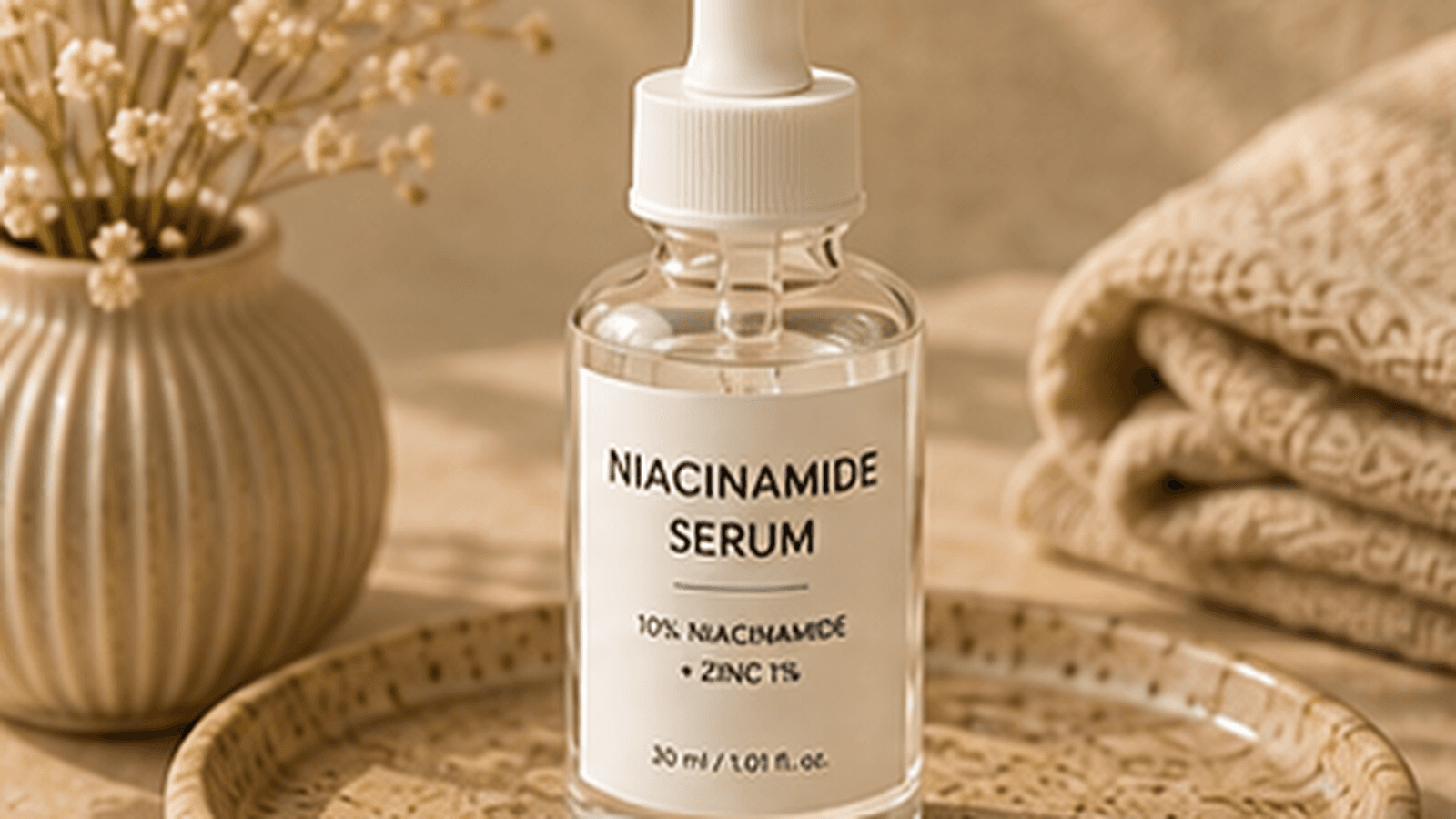
Niacinamide is vitamin B3. On a serum label it can look like a new discovery. It is not. The same nutrient exists as nicotinamide, a form of B3 your body already uses. In skincare, you put a small amount on the face so it can act where you apply it.
People reach for it hoping it will calm oil, even out tone and make pores look smaller. Some of that is fair. Some of it is wishful. The useful version of this ingredient is quieter than the marketing around it.
Why it is in so many formulas
Vitamin B3 supports several jobs in the skin, including how the outer layer holds water and how pigment is passed between cells. That is why niacinamide shows up in moisturisers, serums and, now and then, sunscreens. Cleveland Clinic describes it as a well-tolerated all-rounder: barrier support, a calmer look to redness for some people, and a modest brightening effect on dark marks.
It is not a medicine that treats every skin disease. Eczema, rosacea and acne each have their own care. Niacinamide may sit alongside that care. It does not replace it.
What the evidence actually supports
A healthier-feeling barrier is the most practical claim. Niacinamide can encourage the skin to make more of the fats, including ceramides, that help the surface hold moisture and keep everyday irritants out. When that layer is in better shape, skin often looks less tight and copes better with other products.
Oil is more mixed. In 2006, Draelos and colleagues tested a 2% niacinamide moisturiser in two small trials. In Japanese volunteers, sebum excretion fell after a few weeks. In Caucasian volunteers, oil sitting on the surface fell, but the excretion rate itself did not. You may notice less midday shine. You may not. It is not a mattifying filter in a bottle, and it does not switch oil glands off.
Uneven tone is one of the better-studied uses. A 2002 trial by Hakozaki and colleagues used 5% niacinamide and found it could reduce the look of hyperpigmentation compared with the vehicle cream. The proposed mechanism is not bleaching. Niacinamide can slow how melanin is transferred from pigment cells to the surrounding skin. Dark marks may look a little softer after weeks of use. They do not vanish, and they can return with sun. Sunscreen still does the heavier work of stopping new marks from deepening.
Redness is often mentioned because niacinamide has anti-inflammatory activity. Some people with easily flushed skin find it soothing. Others notice nothing. It is not a treatment plan for rosacea on its own.
Pores are where the copy usually overreaches. Nothing proven shrinks the actual opening. Cleveland Clinic is clear on this. Niacinamide may make pores look less obvious if the surface is smoother and a little less oily. The hole itself does not get smaller.
Fine lines sit in the same modest bucket. A 5% formula has been studied for the look of photoaged skin, including wrinkles and sallowness. Antioxidant activity may play a part. That is not the same as reversing ageing.
How much is enough
Most of the useful research sits around 2% to 5%. Many leave-on products land in that range. Cleveland Clinic notes that most formulas contain 5% or less. Ten percent is popular on shelves. It is not clearly better, and it is more likely to tingle or bring up irritation. More is not a personality trait. It is just more.
If your skin is easily annoyed, start with a lower strength a few nights a week. You can build up. You do not need to stack a cleanser, toner, serum and cream that all contain it on day one. The first week should feel ordinary. If the face is tight, flaky or unusually shiny because it is dehydrated, you are doing too much at once. Add a plain moisturiser and drop the extra acids until it settles.
Putting it in a routine
Use it on clean, dry skin, then moisturiser, then sunscreen in the morning. Once or twice a day is typical. There is no special ritual. If a serum pills under the next layer, use less, or wait a minute. Drop a pea-sized amount over the face. You do not need it on the eyelids unless the product says so.
Niacinamide generally plays well with other common ingredients: moisturisers with ceramides, hyaluronic acid, retinoids, and vitamin C. The old rule that niacinamide and vitamin C must never meet is largely leftover laboratory anxiety. Many modern formulas are used together without drama. If a very acidic vitamin C stings when you layer them, put one on in the morning and the other at night.
With a retinoid, niacinamide is often used as the calmer neighbour: barrier support while the retinoid does the slower work on clogged pores or texture. If both bother you, use the retinoid alone until the skin settles.
What it will not do
It will not empty every pore, fade every mark or make oily skin behave like dry skin. It can sting, itch or flush, though that is uncommon at ordinary strengths. A brief tingle is different from a spreading rash. Stop if you get swelling, hives or lasting redness. Patch-testing a small area for a day is a reasonable habit if you react to new products.
Give it a few weeks, not a weekend. Barrier and tone changes are slow when they happen at all. If a bottle promises a new face, the bottle is doing too much work. Niacinamide is a steady, fairly kind ingredient. That is the real appeal. It is also the limit.