
Skincare guide
What Does Vitamin C Serum Do?
2 September 2026
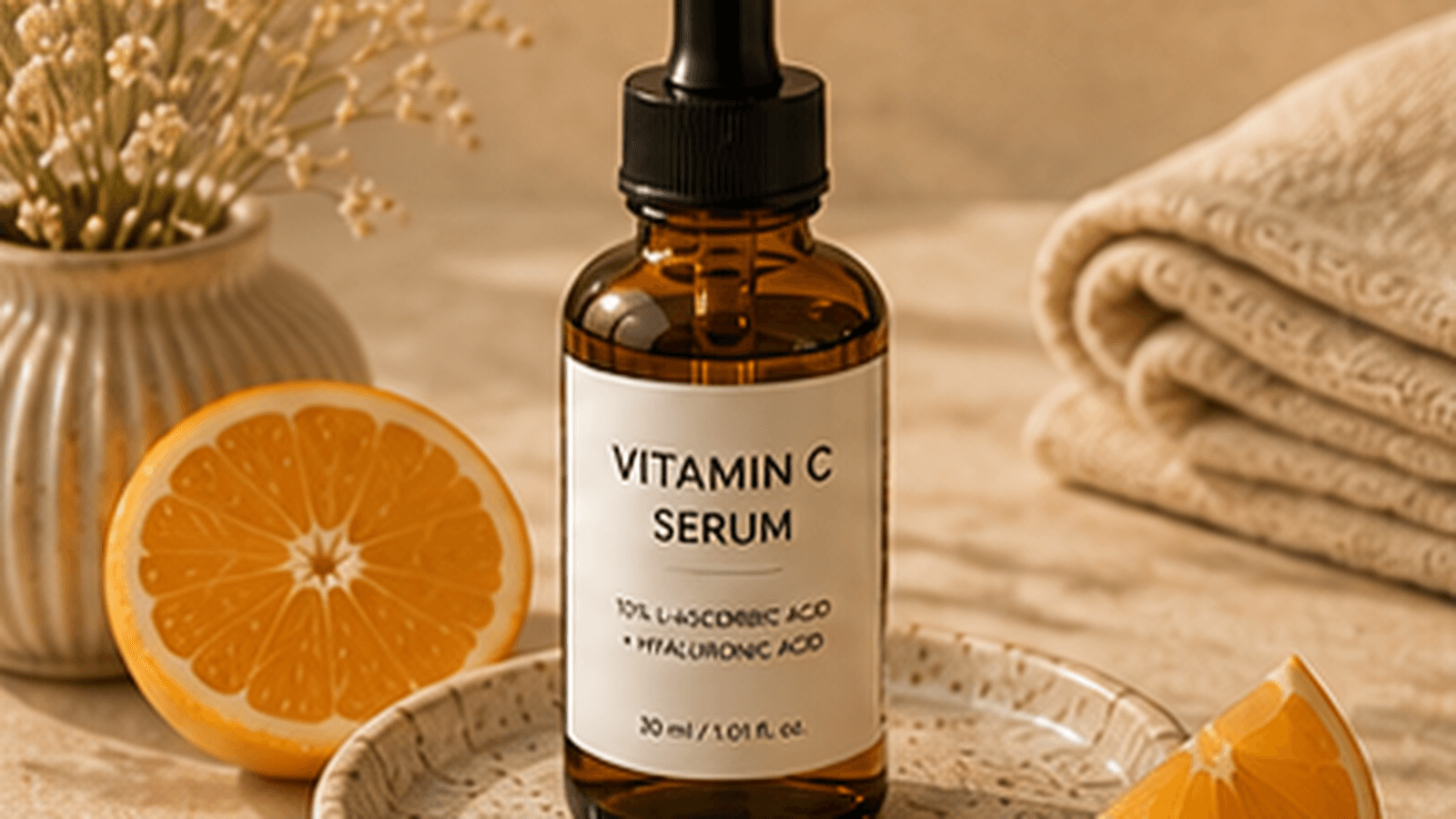
A vitamin C serum is not orange juice for the face. Eating fruit still matters for your body. It does not park much ascorbic acid in the skin. For that, you put a leave-on formula on the surface, usually in the morning, and you keep it away from heat and light so it does not spoil in the bottle.
People buy it for a brighter look and for dark marks. Both can happen, slowly. Neither is whitening, and neither replaces sunscreen.
What is in the bottle
The form with the most skin research behind it is L-ascorbic acid, sometimes written as ascorbic acid. That is vitamin C in a water-based serum, kept quite acidic so it can move into the outer skin. Cleveland Clinic dermatologists look for that name on the label, in a strength somewhere around 10% to 20%.
Other names you will see, such as sodium ascorbyl phosphate, magnesium ascorbyl phosphate or ascorbyl glucoside, are derivatives. They are often more stable and can feel gentler. They also have to convert in the skin, so they may not behave exactly like a low-pH L-ascorbic acid serum. You do not need a chemistry degree to shop. You do need to know that "vitamin C" on a box is a family, not one identical liquid.
A 2001 paper by Pinnell and colleagues, still widely cited, found that L-ascorbic acid was taken up better when the formula was acidic (pH below about 3.5), and that uptake rose with concentration up to around 20% in the model they used. Past that, extra percentage did not keep adding much. Very strong, very acidic serums are also the ones most likely to sting.
What it can do
Vitamin C is an antioxidant. On skin, that means it can mop up some of the reactive molecules produced by UV and pollution before they nick at cells. Cleveland Clinic puts this first, and it is the least glamorous benefit. You will not feel it working.
Dark marks and uneven tone are the reason most people finish a bottle. Topical vitamin C can interfere with steps in melanin production, so sun spots and leftover marks from acne may look a little less obvious. Cleveland Clinic notes that the effect is not permanent. Stop using it and the fading can slip back. Brightening, in this sense, means the mark looks a bit softer against the skin around it. It does not mean the serum will lighten your natural complexion, bleach the face, or wipe out every patch of pigment. Melasma and deep marks often need more than a serum, and they always need sun protection.
Collagen is often mentioned in the same breath. Vitamin C is a cofactor for enzymes that help build collagen. There is laboratory and some clinical support for a firmer-looking surface with regular use. That is not a freeze on ageing, and it will not lift sagging skin. It is a small assist, not a procedure in a dropper.
Used under sunscreen, it can add a little extra help against the UV that still gets through. Cleveland Clinic describes that pairing as synergy. It is not a licence to skip the cream.
Colour, air and the bathroom shelf
L-ascorbic acid oxidises. Air, heat and light speed that up. A fresh serum is often watery and pale. As it breaks down it turns yellow, then orange or brown, and it smells a bit off. At that point it has already done a lot of its reacting in the bottle. Throw it away.
Buy a bottle you cannot see through, or at least a dark one, and close it. Do not leave it on a sunny windowsill. You do not need a fridge unless the brand says so, but cool and dark is kinder than a steamy shelf over a kettle.
How to use it
Cleanse, then the serum, then moisturiser if you use one, then sunscreen. Cleveland Clinic prefers mornings because of that last step. You can use it every day if your skin stays comfortable. A little goes on the face and neck. Wait until it settles before the next layer so it does not pill.
Sunscreen still does the outdoor work. Vitamin C does not block UV the way a tested SPF product does. If the words sunscreen and sunblock have always been a muddle, we unpack that in a separate guide.
Niacinamide can live in the same routine. The older warning that the two cancel each other out is mostly outdated. If a strong acid serum stings on top of niacinamide, split them morning and night. Salicylic acid or a retinoid in the same sitting can also be a lot. Many people keep vitamin C for mornings and the stronger exfoliant or retinoid for nights.
Stinging, dryness or redness means the formula may be too strong or too acidic for you, or the skin barrier is already annoyed. Drop to a lower percentage, try a derivative if L-ascorbic acid is too sharp, use it less often, or stop. Cleveland Clinic's timeline is about three months before you judge the look of marks and tone. A week of glow from hydration is not the same as that slower change.
If the liquid has gone brown, it is done. If the skin is still marked after months of a stable serum and daily sunscreen, a clinician can talk about other options. Vitamin C is a useful antioxidant with a modest record on uneven tone. It is not a bleach, and it is not instant.