
Skincare guide
How to Use Glycolic Acid
2 September 2026
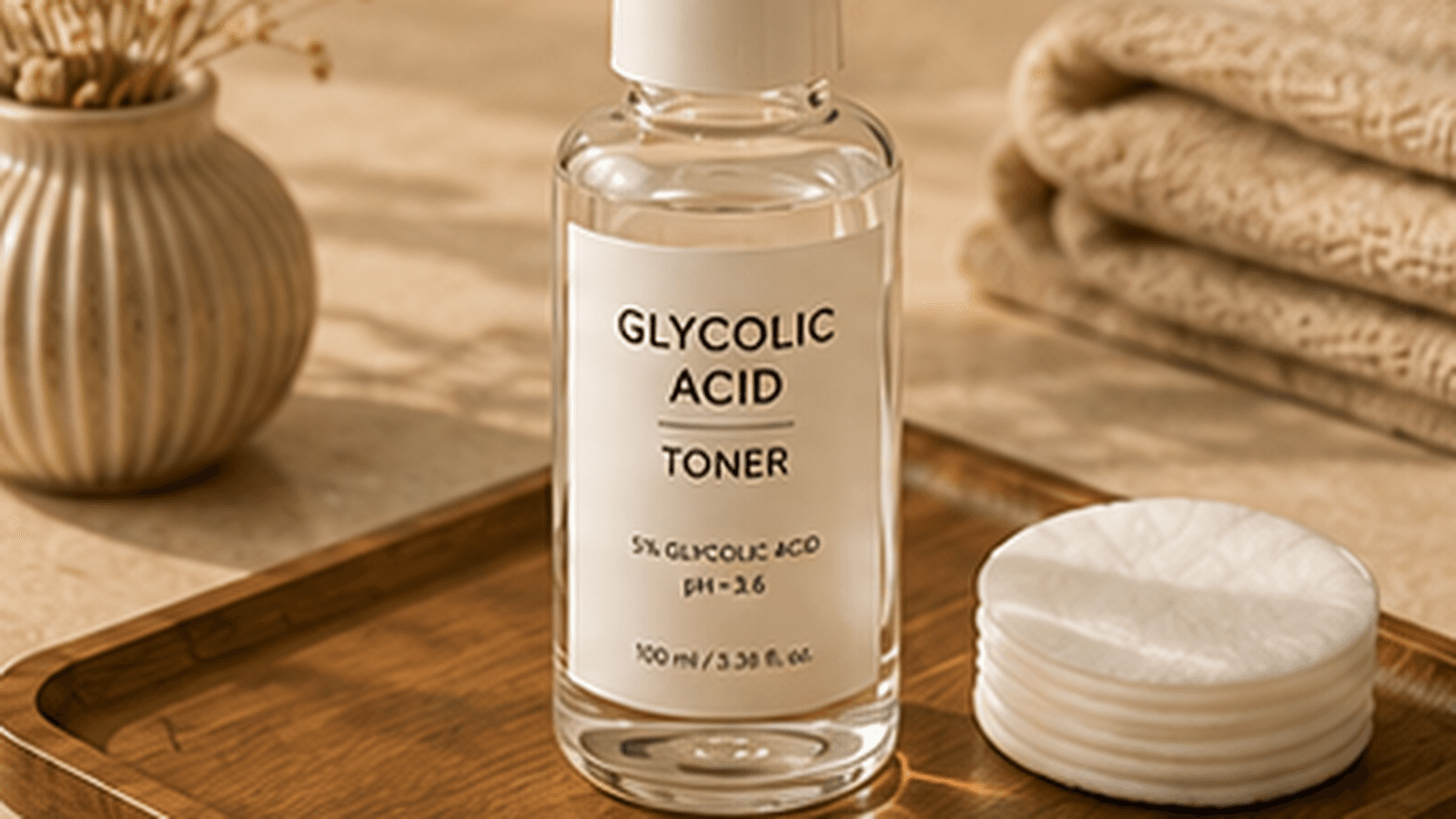
A lot of glycolic acid in Pakistani shops sits in a toner bottle. You swipe it on with a cotton pad and hope the next morning looks brighter. Sometimes it does, after weeks. Sometimes the face just stings and flakes. The ingredient is an exfoliant. It is not a glow filter.
What it is doing on the surface
Glycolic acid is an alpha hydroxy acid, often made from sugarcane. It dissolves in water, not oil. Cleveland Clinic dermatologists describe it as the smallest common AHA, which is why it can work a little deeper in the outer skin than some of its cousins. It loosens the links between dead cells on the surface so they shed more evenly.
That can leave skin looking smoother and a bit more even in tone. Dark marks from mild sun or old spots may look softer over months, not overnight. Fine lines can look less obvious. None of that is a promise to reverse ageing, and none of it works if you burn the barrier first.
Because it is water-loving, glycolic acid works mainly on the surface. Salicylic acid is oil-soluble, so it is often the more direct choice when clogged pores are the main complaint. Glycolic acid can still sit in a routine if texture or uneven tone is part of the picture. It is not the only tool for blackheads.
Toner is not a peel
Over-the-counter glycolic products are usually milder than a clinic peel. A toner or serum you use at home is meant for repeated, careful use. An in-office peel uses a higher concentration. Cleveland Clinic is plain about the difference: the professional version can change the look of the skin faster. A shop toner may take several months of steady use before tone or texture looks different.
Higher percentage is not automatically better. A strong pad on irritated skin just takes off more than you meant to. If you have eczema, rosacea, an active infection, or skin that is already raw, this is a poor week to start. Patch-test a small area first.
How often to use it
Cleveland Clinic's practical advice is to begin once or twice a week, then increase only if the skin stays comfortable. Some people later use it most nights. Many never need to. There is no prize for nightly acid.
Use it in the evening on clean, dry skin. A glycolic toner or serum is generally left on. Do not rinse it off unless the label says to. Follow with moisturiser. If the next layer pills, you used too much, or the skin was still damp. A thin pass is enough. Do not stack a glycolic toner, a glycolic serum and a scrub in the same hour.
The American Academy of Dermatology warns that over-exfoliation can leave skin redder, drier and, for some people, more breakout-prone. People with darker skin also need to go gently. Aggressive exfoliation can trigger dark marks after irritation. If the face feels tight, looks shiny-dehydrated, or stings under plain water, you have already gone past useful.
Sun the next day
Glycolic acid makes the surface more sensitive to UV. Cleveland Clinic treats that like retinol: night use, then broad-spectrum sunscreen of SPF 30 or higher in the daytime, and a second pass if you are outside for long. Skipping the cream because the toner "brightens" is backwards. Freshly exfoliated skin burns more easily, and burn is how new dark patches arrive.
If the words sunscreen and sunblock still feel interchangeable, that difference is unpacked separately. The job here is simpler: put enough on.
What not to pile on at the start
When you first add glycolic acid, Cleveland Clinic suggests keeping other exfoliants, retinol and vitamin C out of the same routine until you know how your skin behaves. That is not a forever ban. It is so you can tell which bottle caused the sting. Later, some people use vitamin C in the morning and glycolic acid at night. Some never combine them, and that is fine.
If the skin settles and you still want more, add one change at a time. A glycolic toner a few nights a week, moisturiser, sunscreen. That is a routine. It is also enough.