
Skincare guide
How to Use Salicylic Acid on Your Face
2 September 2026
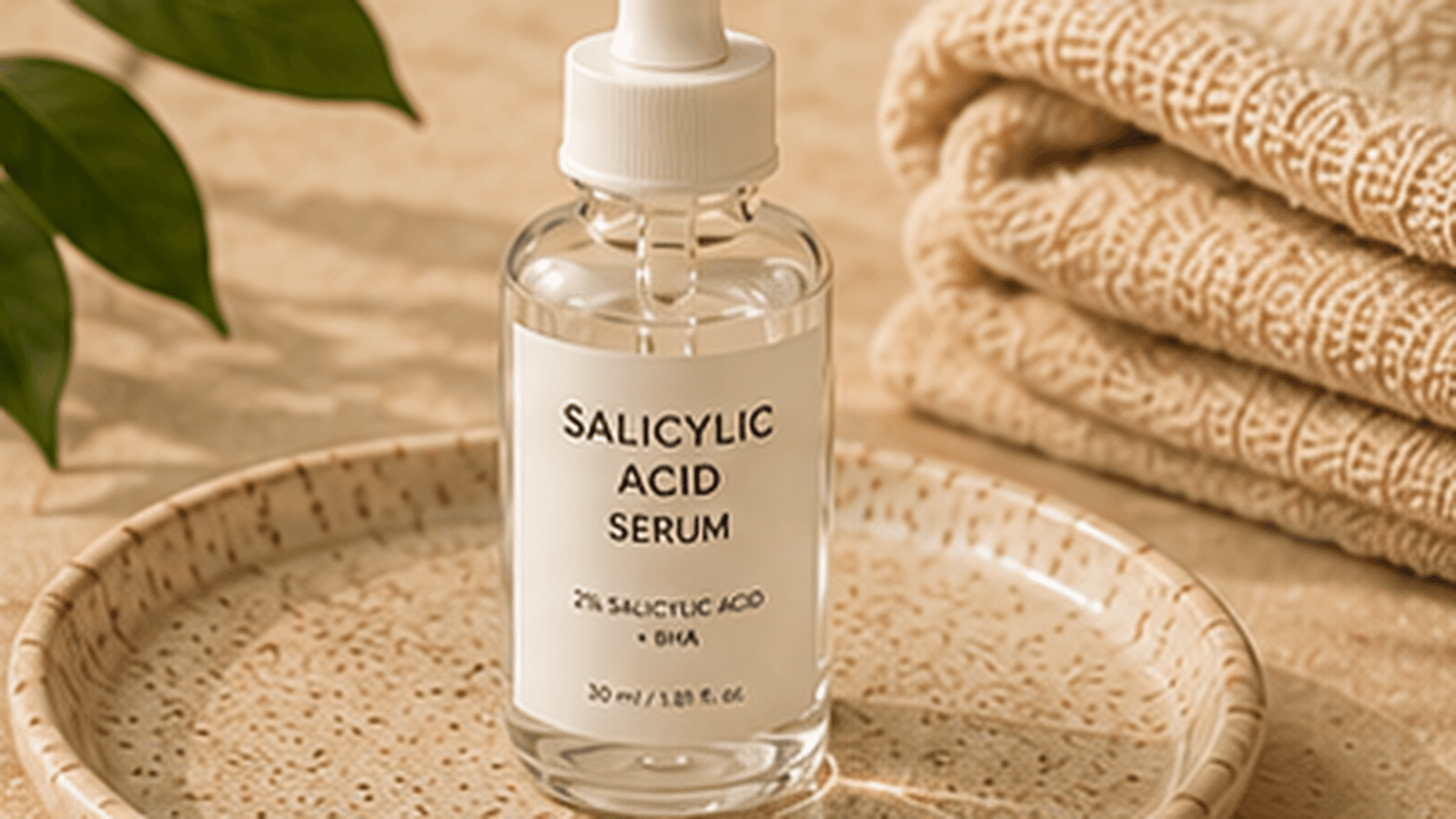
Salicylic acid shows up in face washes more than in fancy serums, and that is not an accident. It is a beta hydroxy acid. It dissolves in oil. The useful job is inside a greasy, clogged pore, not a general polish of the whole face.
If the complaint is blackheads on the nose, this is usually a better first acid than glycolic acid. If the complaint is dullness and uneven tone, the two are not interchangeable.
Oil-soluble, not a deeper miracle
Cleveland Clinic describes salicylic acid as a go-to for blackheads: a wash around 2% to 4%, once a day to start, or medicated pads if you prefer those. The American Academy of Dermatology also uses salicylic acid (or benzoyl peroxide) when the spots are small red bumps and pustules. It helps unclog. It does not kill acne bacteria the way benzoyl peroxide does. Cleveland Clinic is direct about that limit.
So the honest pitch is modest. Fewer packed pores over weeks. Less of the dark open dots if you keep using it. Not a five-minute nose, not a detox, not a smaller pore opening.
We cover blackheads on the nose as their own problem. This page is the ingredient: how to put it on without wrecking the barrier.
Cleanser versus leave-on
A salicylic acid face wash spends a short time on the skin, then rinses off. That is often enough for oily or acne-prone faces, and it is usually the gentler way to start. A serum, toner or cream stays put. More contact time can mean more effect and more dryness.
You do not need both on day one. If a 2% wash already flakes your cheeks, adding a leave-on is stacking the same acid. Use the wash in the evening, or every other evening, and moisturise. If after a few weeks the T-zone is still congested and the skin is comfortable, a leave-on on the oily areas only is a reasonable next step. Follow the percentage on the pack you actually bought. More is not a personality.
Can you use it daily? Some people can, once the skin has adapted. The recorded question is common. The answer is: only if it does not sting, peel or leave you tight. If it does, use it less often. The acid will still be there next week.
A simple way to put it on
Cleanse, rinse, pat dry. For a wash, massage it on for the time the label suggests, usually under a minute, then rinse. Do not leave a cleanser on as if it were a mask unless the product says so. For a leave-on, a thin layer on the oily parts of the face is enough. Keep it out of the eyes and off cracked skin.
Moisturiser after. Sunscreen in the morning. Chemical exfoliants can leave the surface a little more sun-sensitive. That is not a reason to skip daylight. It is a reason not to skip cream.
With vitamin C, many people keep the acid at night and the serum in the morning. Using both in one sitting can be a lot of sting, especially if the vitamin C is very acidic. You can use them in the same week. You do not have to use them in the same minute.
When to stop
Dryness, peeling, burning that lasts, or a new rash means the strength or the frequency is too high. The American Academy of Dermatology also cautions against piling chemical exfoliation on top of retinoids or other drying treatments until the skin can take it. If you already use a retinoid at night, a salicylic wash in the morning is often plenty. Using both leave-ons together is how people end up shiny, sore and then oilier as the barrier complains.
Give a simple routine several weeks. Blackheads loosen slowly. If the area is painful, scarring, or getting worse, that is a clinician problem, not a stronger wash.